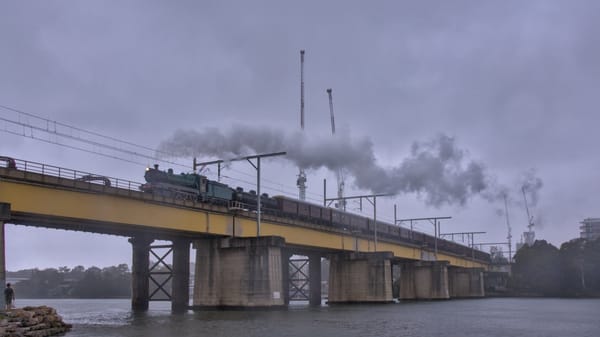
100 Years of Electric Trains
The 1st of March marked the 100th anniversary of the first ever electric passenger train in NSW
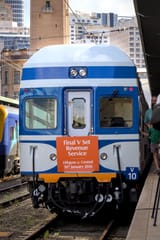
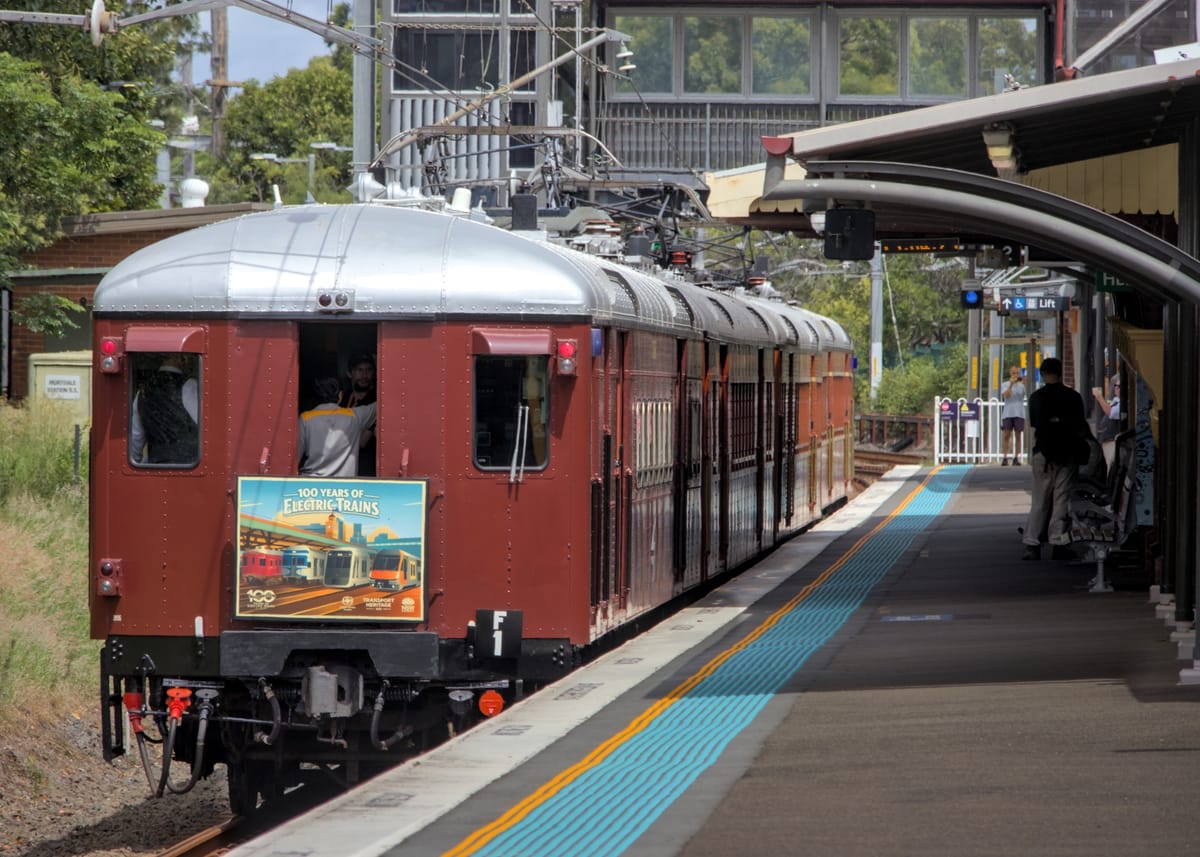
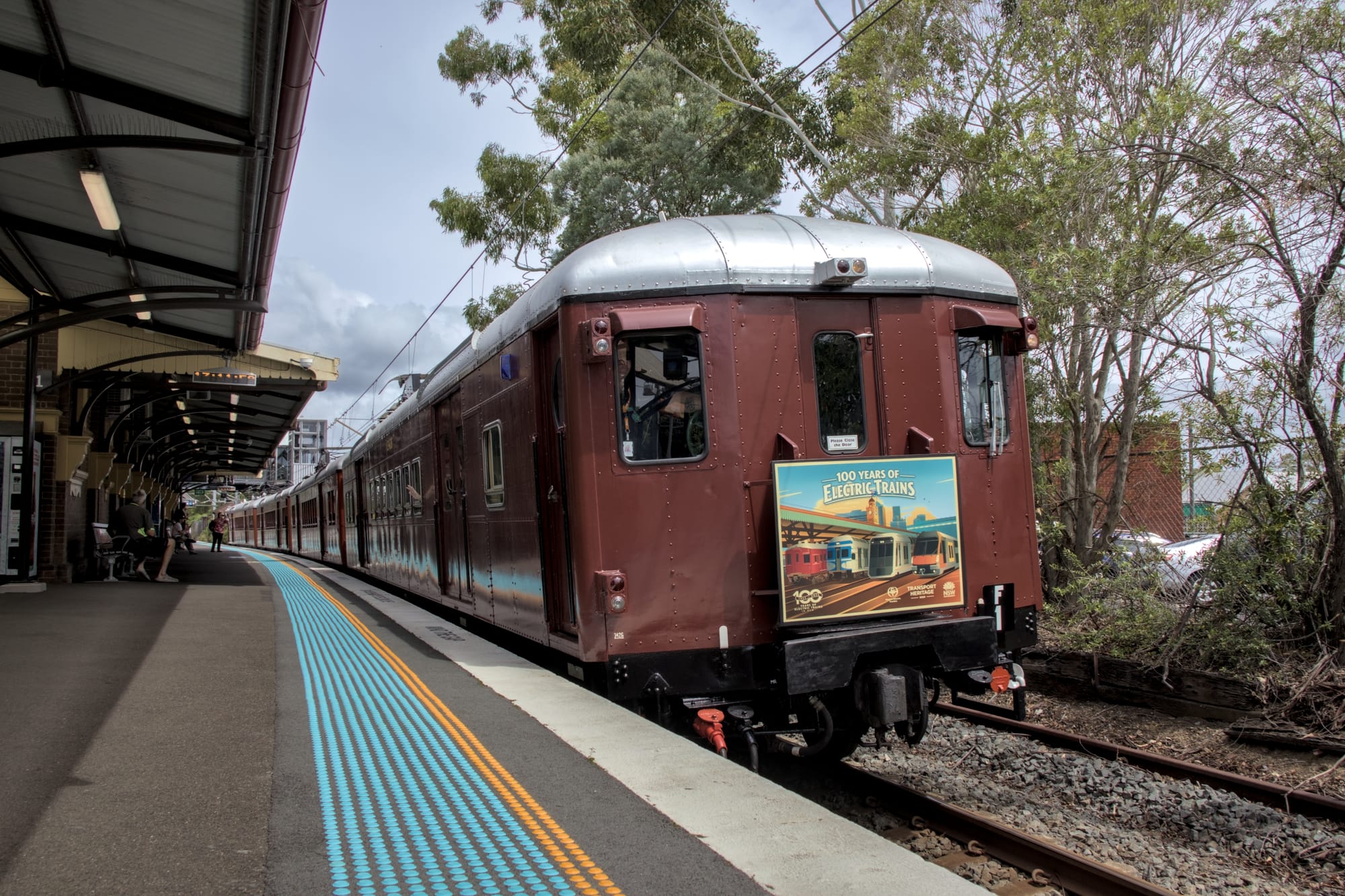
On the 1st of March, 1926 at 0754, the first electric passenger train departed Central, bound for Oatley. Now, one hundred years later, the same journey has been recreated aboard the finely preserved single-deck "red rattler", F1.
Background
The F sets were the first electric passenger train to serve the Sydney rail network beginning in 1926. Better known as red rattlers, these became an icon of transit in Sydney, with their unpowered (often, left open) doors and distinct sounds.
They were withdrawn in 1992, having served for almost 66 years. The F sets witnessed the opening of the Harbour Bridge, many livery changes and the organisational reshuffling from NSWGR all the way up to RailCorp.
F1 is now operated by Historic Electric Traction as part of their preserved heritage fleet, being the only regularly operational consist. A significant number of other carriages have also been preserved or are owned by various private collectors.
Spotting
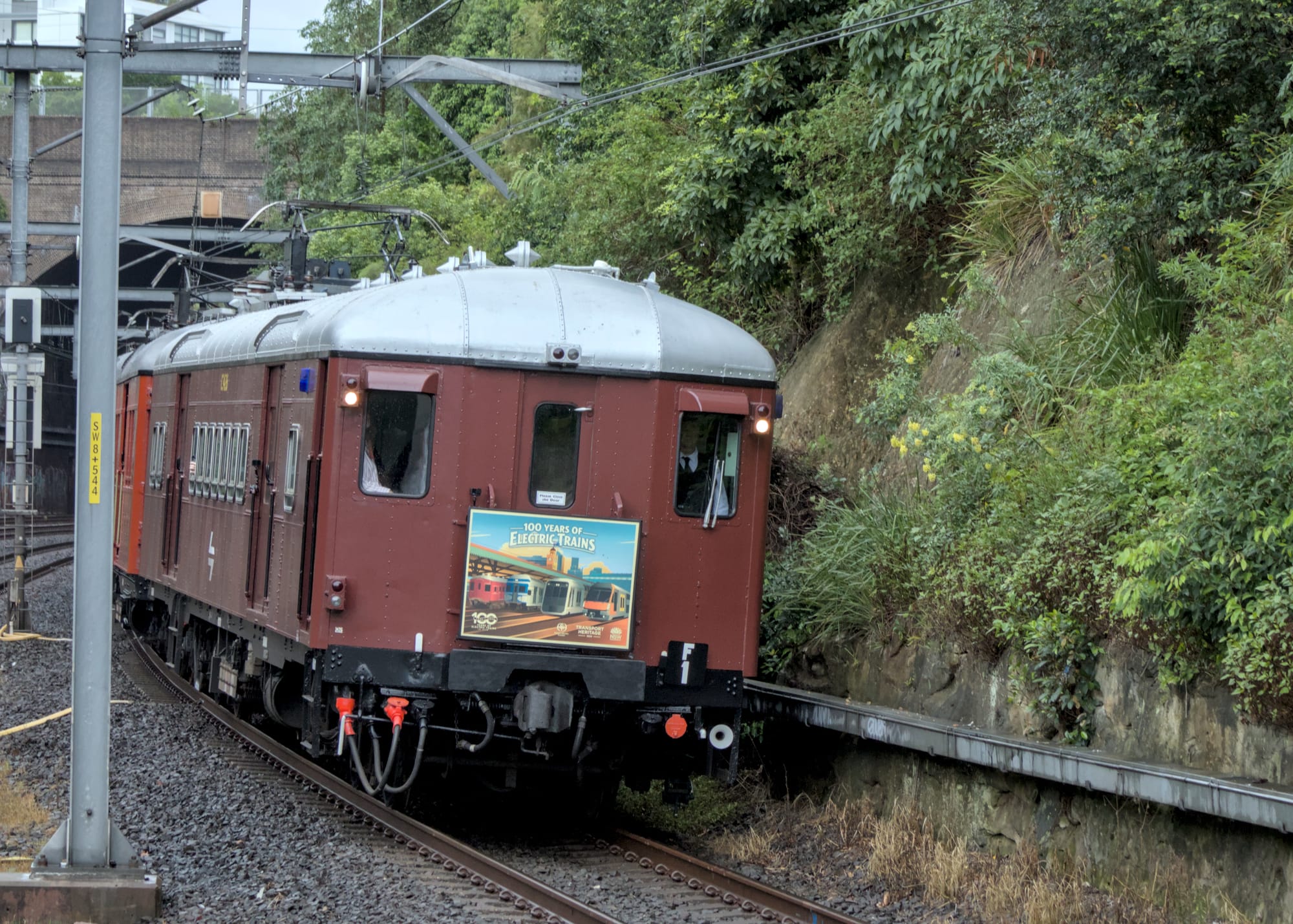
Waking up early today, I had to get a combination of a train and bus to make it to Banksia in time to capture the first run of the day, seen below passing Platform 2 as it retraced the historic journey one century prior, almost down to the minute.
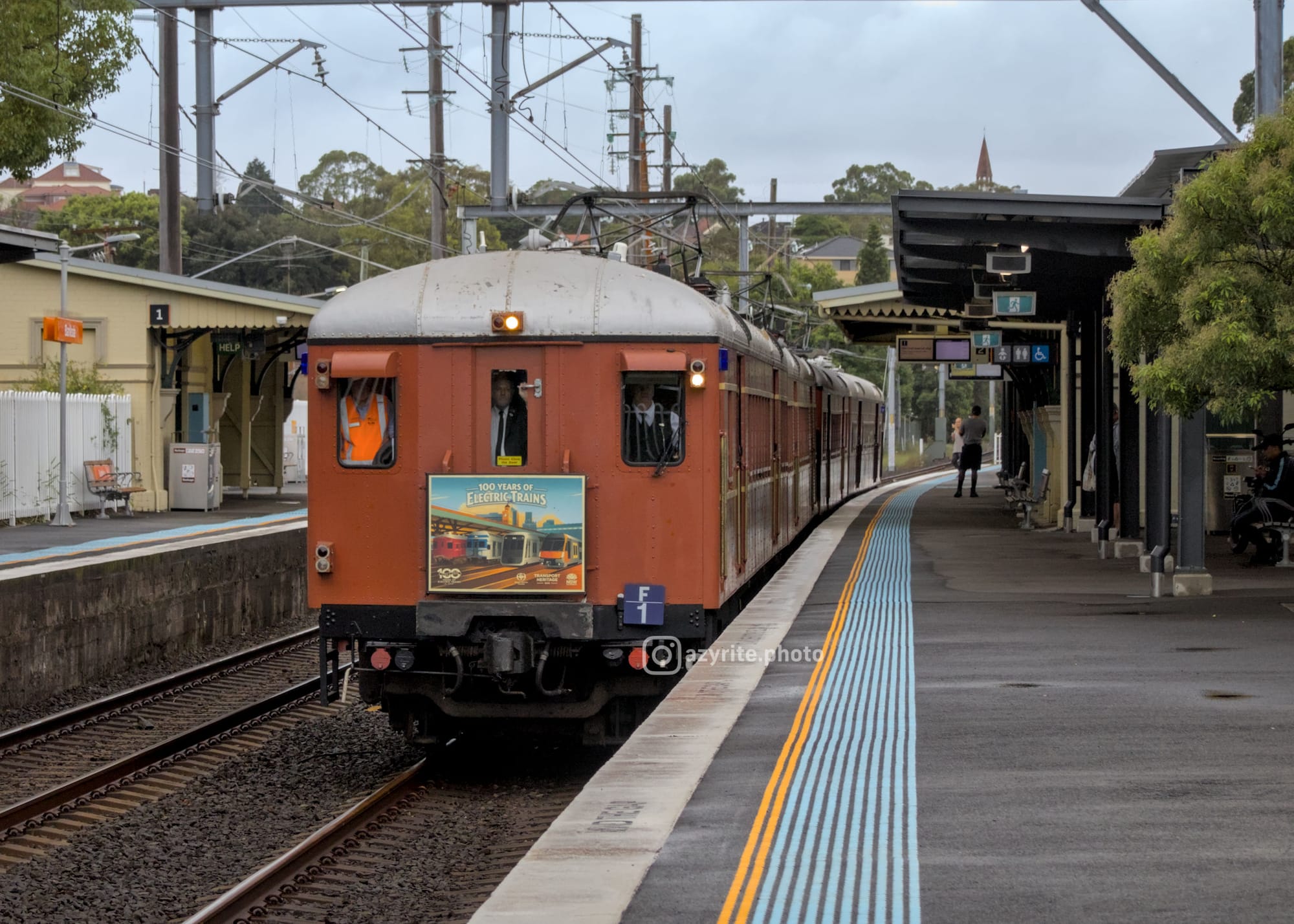
It was one of five scheduled runs of the day, with the last departing Central at 1357. I was aboard the third run of the day, the 1058 train along with a friend, but before that, we moved between different stations on the T4, aiming to get some good shots in before it was time to head to Central for our trip.
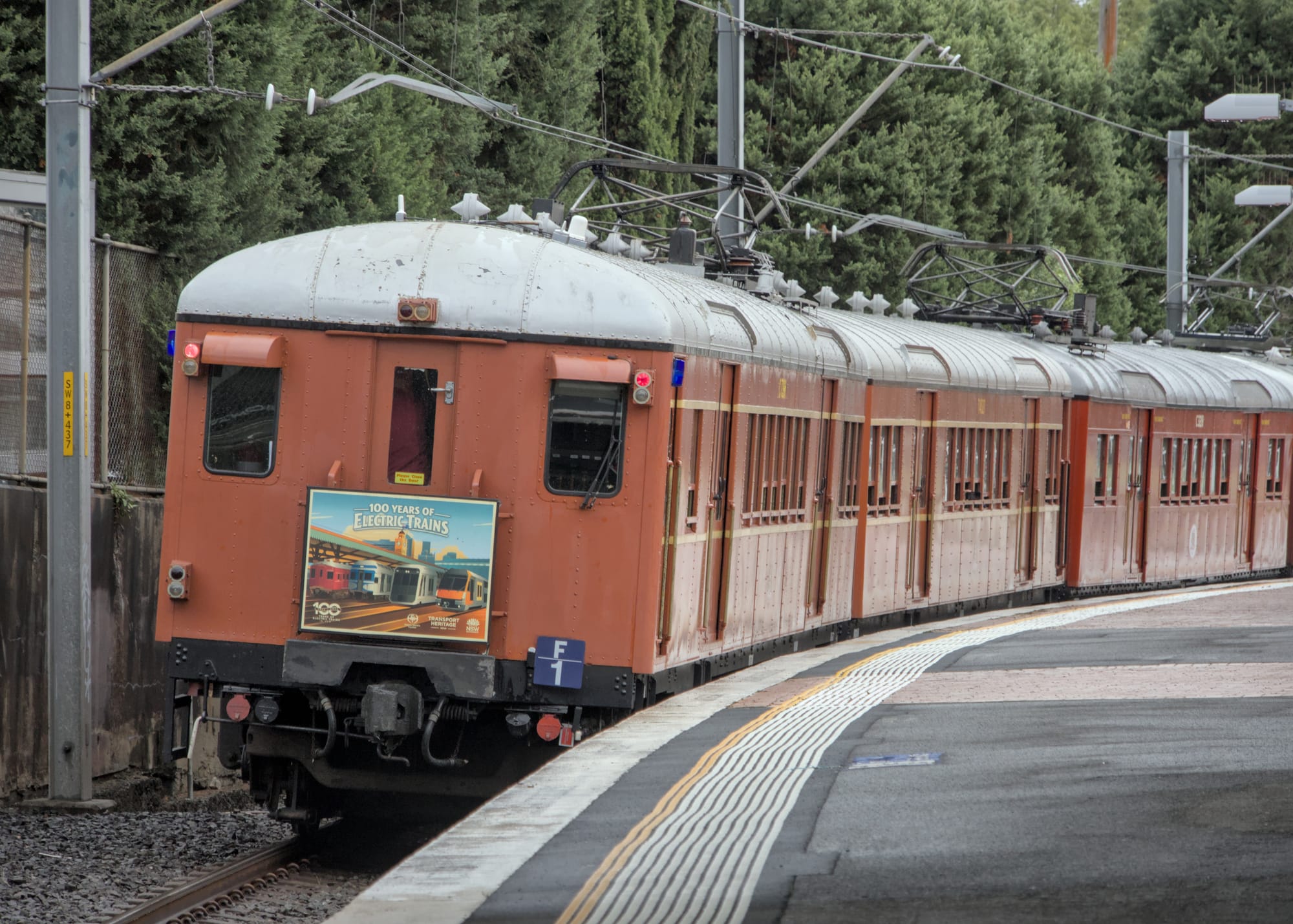
After F1 passed Banksia, we walked to the nearby Arncliffe Station, waiting for its return journey toward Central. We could have taken a T4 train, but as Banksia and Arncliffe were both small stations, few trains actually stopped despite the fairly high frequency overall frequency of the T4. Thus, walking was actually faster by about 5-10 minutes.
Arncliffe
We had some time in Arncliffe before F1 was due to pass through, which we used as an opportunity to get a quick bite, with a bahn mi store placed conveniently by the station.
Carlton
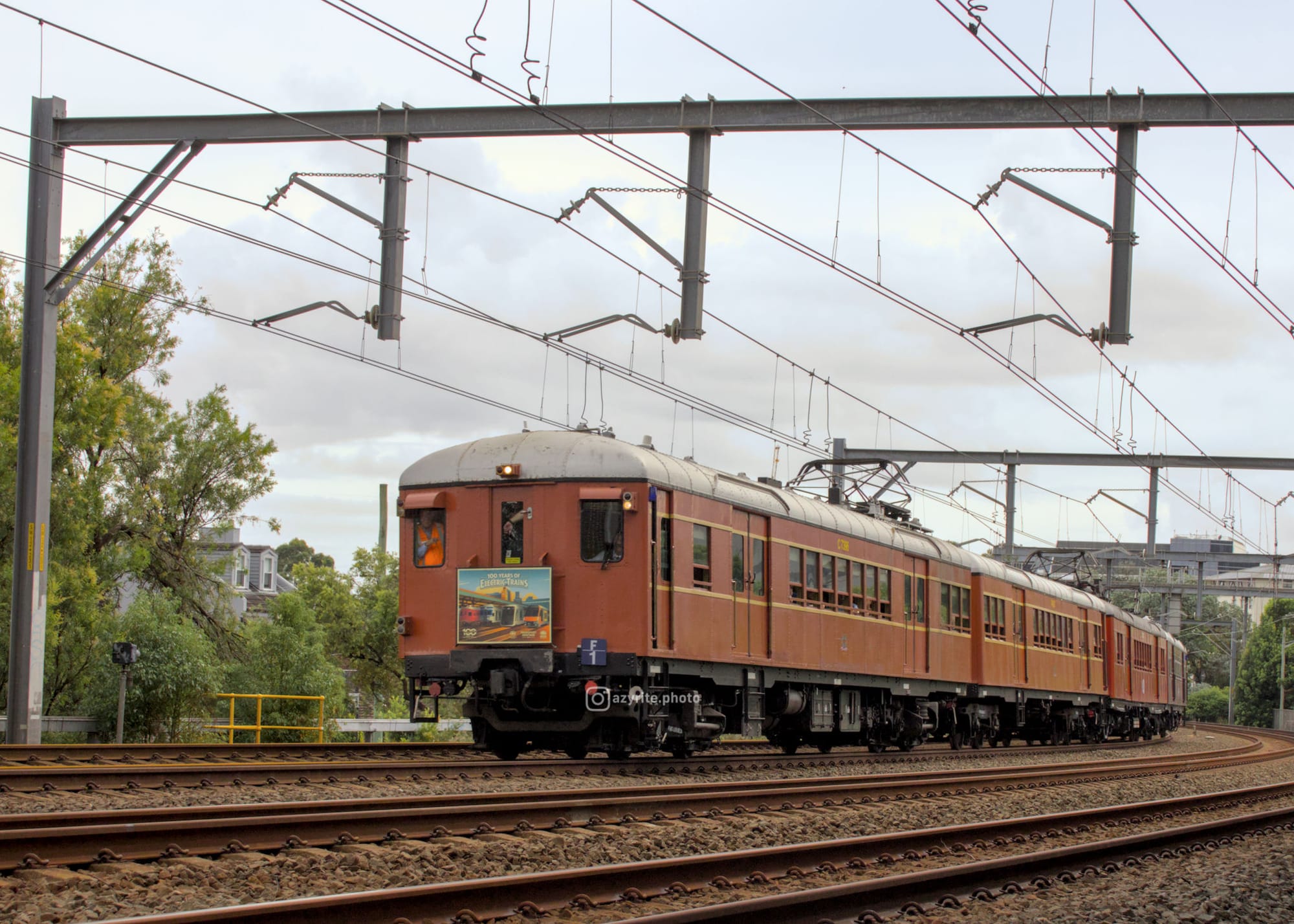
There is a good spot about halfway between Carlton and Kogarah located beside a curve, although it is slightly closer to Carlton by walking distance. The quad-track curves nicely and the fence protecting the rail corridor is low enough to not obstruct the view.
Once we got there, we barely missed the Kiama Picnic Train going south (which we did not know was on!), and met a fellow trainspotter who was filming.
The F set passed by not long after:
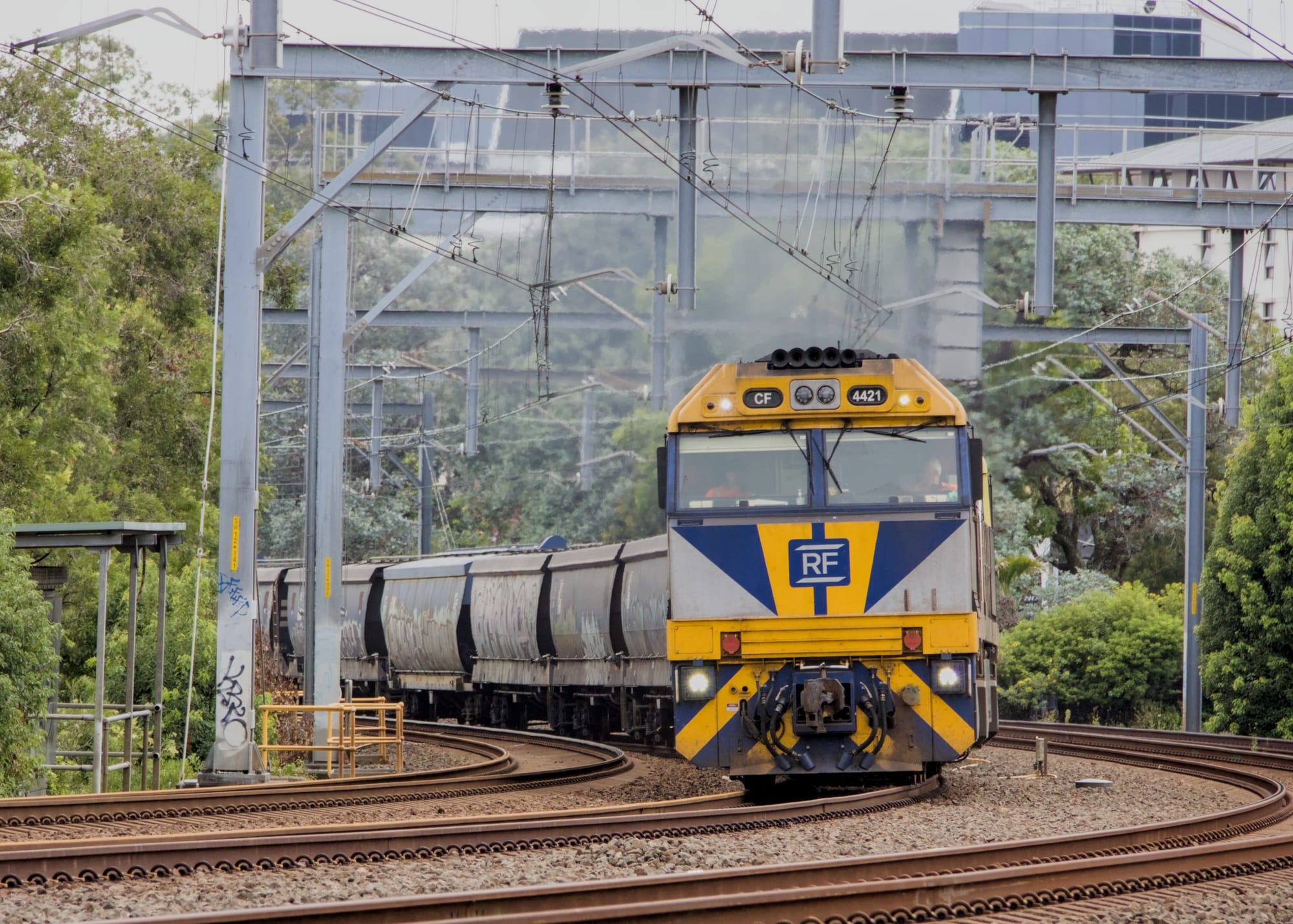
Followed by a couple regular T4 and SCO services, and then CF 4421 leading what appeared to be an empty coal train toward the Metropolitan Colliery in Helensburgh:
After that, it was our turn to get on the F set! We headed back to Central from Kogarah to board the third trip of the day.
Central
Although AnyTrip indicated that F1 would turn around using the City Circle, the train actually reversed just past Platform 20, stopping briefly before the next signal to change ends and allow the points to switch before proceeding into Platform 22 to begin the next run toward Oatley.
Apparently, due to the extra width of F1 (compared to the current rolling stock) it is unable to use the City Circle as gap fillers have been added.
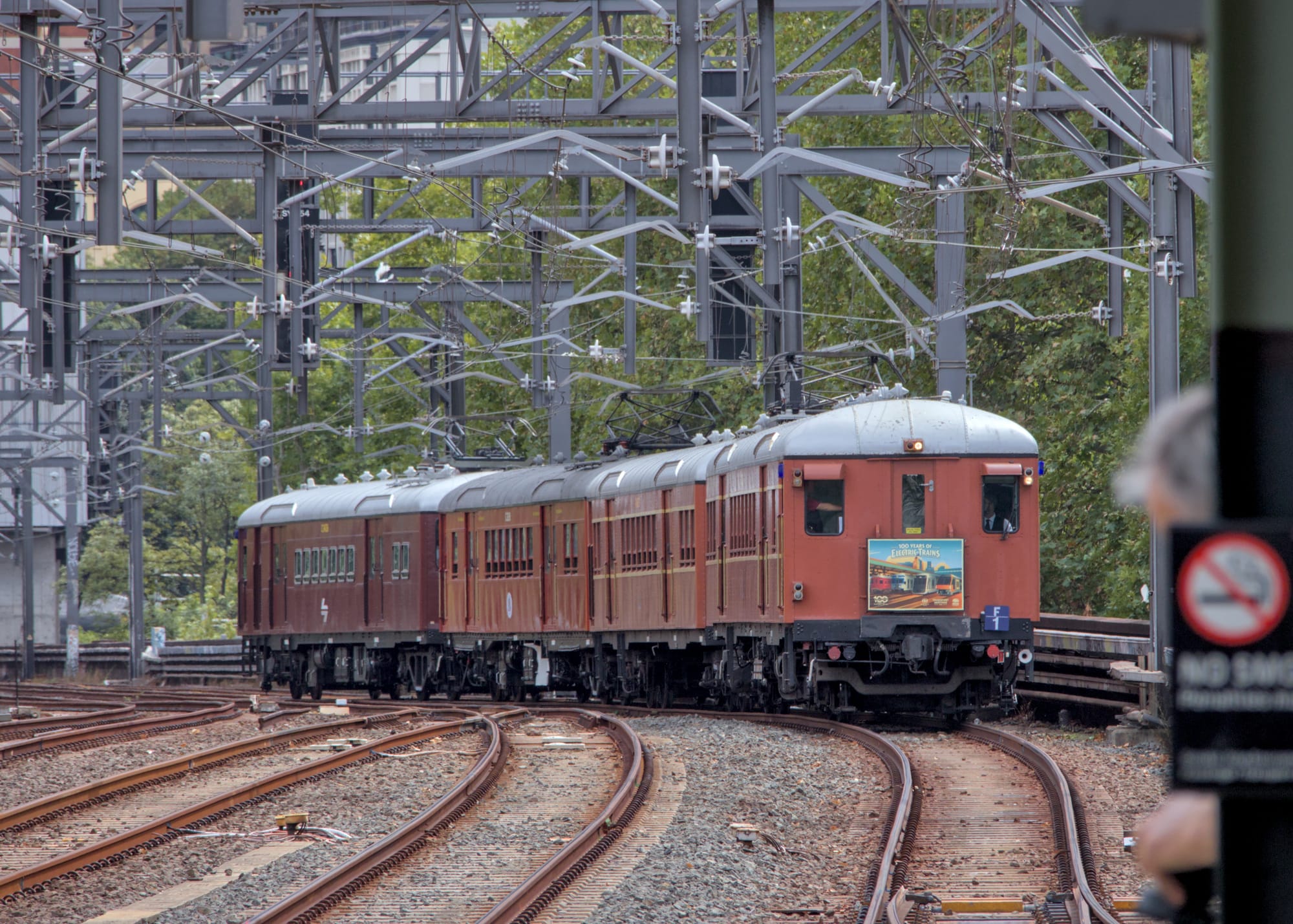
I personally do not have any real nostalgia for these trains, given I wasn't even alive during any of their revenue operations, although I do appreciate how iconic they once were (and still are, in a heritage sense).
I was in Car A, the leading car toward Oatley and the journey was pleasant, with a nice breeze blowing through the car from the opened windows. Along the way we saw quite a number of spotters with cameras and other gear on platforms and beside the rail line photographing the train.
Once we returned to Central, we decided to spot F1 one last time at Mortdale.
Mortdale
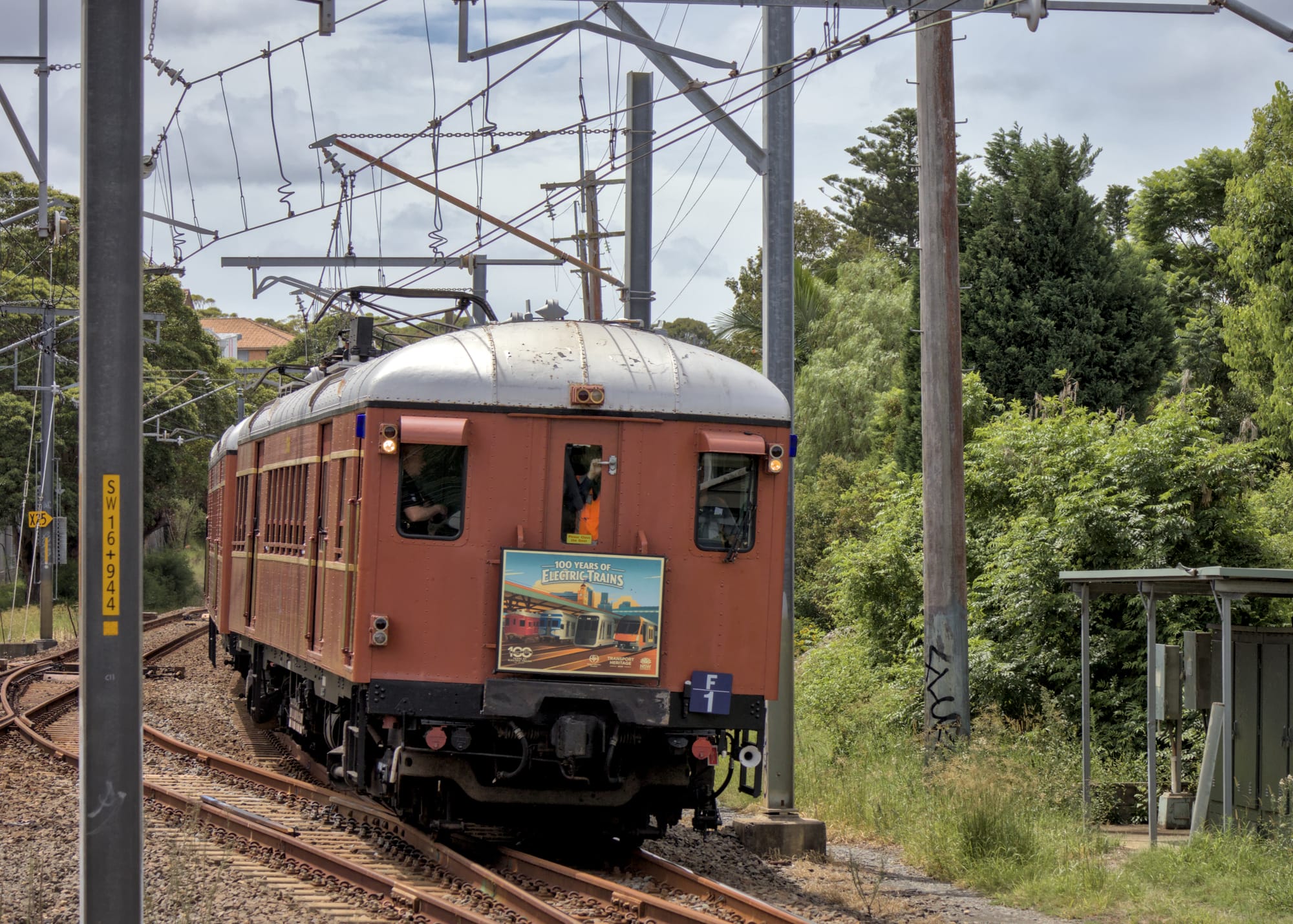
We were able to capture F1 twice at Mortdale, due to its proximity to Oatley, both the down and return up journeys.
First, toward Oatley:
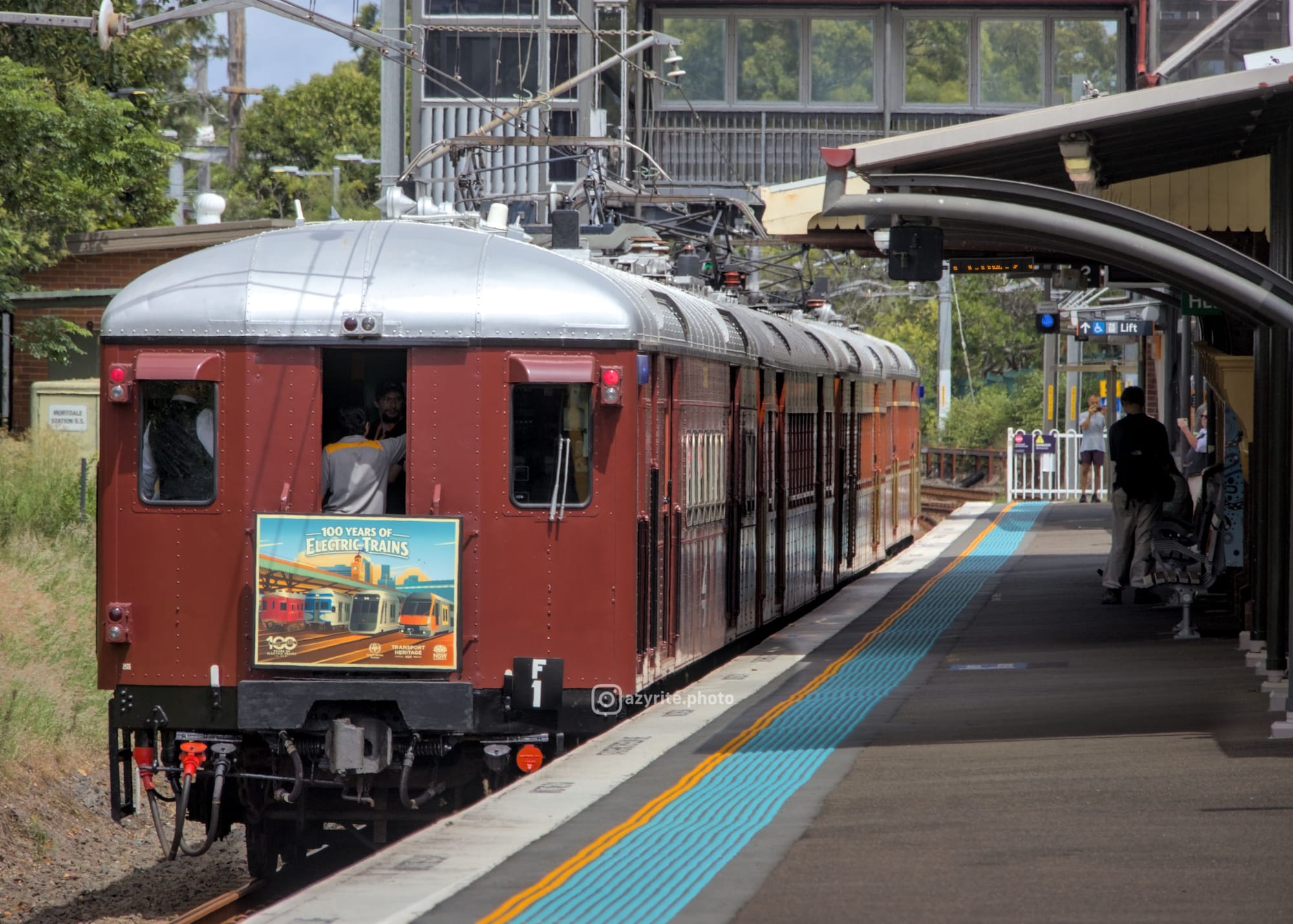
Then returning to Central through Platform 1: